

When the power goes off, the garden doesn't politely pause. Pots dry out, seedlings wilt, and that one thirsty bed near the wall always seems to suffer first.
That's why I love gravity fed drip irrigation. It's simple, quiet, and it keeps watering even when the pump can't run. In South Africa, where power cuts and water stress are part of life, a gravity system feels like a small upgrade that brings real peace.
I'm going to show you a straightforward setup that works with a raised JoJo tank (or any tank), uses common irrigation parts, and doesn't need Eskom to cooperate.
Why gravity-fed drip irrigation stays reliable during power cuts
As of late February 2026, national load shedding has been mostly suspended, which is a relief. Still, I don't plan my garden around "stable for now". Local load reduction and surprise outages can happen, and they always seem to land on hot afternoons when plants need water most.
A gravity-fed system avoids the usual failure points:
- No electricity needed for pressure, because height creates pressure
- No pump to prime, trip, or burn out
- No sprinklers throwing water into the wind
Drip also matches the way we should be watering in South Africa: slow, targeted, and low-waste. Instead of wetting the whole surface, drip sends water to the root zone. As a result, evaporation drops and weeds slow down because dry gaps stay dry.
If you want proof that gravity drip scales beyond home gardens, it's used in real agricultural setups too. This case study on gravity-fed drip irrigation during South African power outages explains how stored water and gravity keep irrigation going when the grid can't.
If I can only do one thing to "load shedding-proof" watering, I store water high enough to flow on its own.
The simplest gravity-fed drip layout (tank, filter, pipe, drippers)
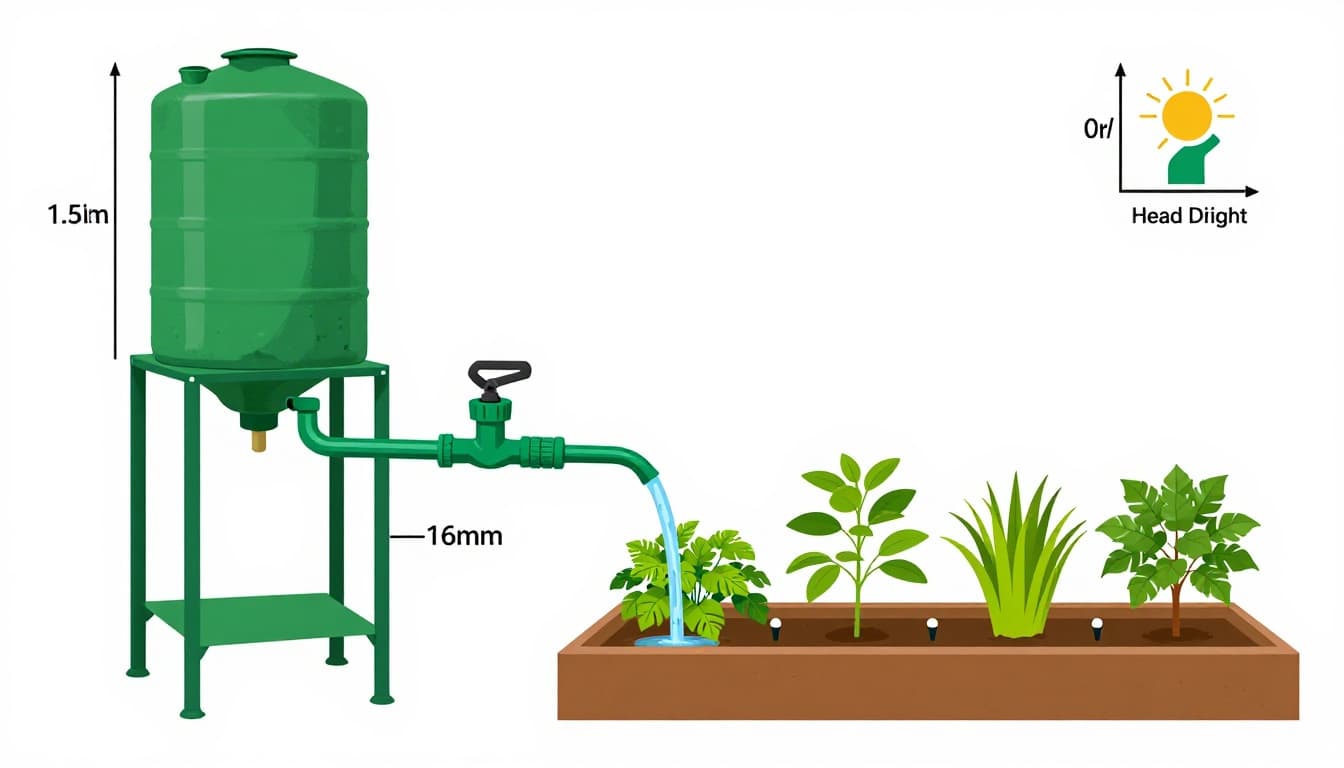
Think of a gravity system like a mug of tea. Tip it higher, and it pours faster. Keep it low, and it dribbles. Your tank works the same way.
Here's the core layout I aim for:
- Raised tank outlet: The higher the tank, the steadier the flow. Even 1 to 1.5 m helps.
- Ball valve: This becomes your on-off switch at the tank.
- Filter (often 120-mesh): Drippers clog easily, so filtration isn't optional.
- Mainline (usually 16 mm LDPE): This runs along the bed.
- Take-offs to microtubing (4 mm): Short runs from the mainline to each plant.
- Drippers or adjustable emitters: Pick ones that perform at low pressure.
- End-of-line flush point: A simple flush valve or removable end cap saves hours later.
One quick reality check: "pressure-compensating" drippers often need more pressure than gravity provides. For gravity systems, I stick to simple drippers designed for low pressure, or adjustable micro-emitters that I can tune plant by plant.
For deeper background on drip parts and maintenance habits, I keep this bookmarked: Netafim's drip irrigation handbook. It's written for small-scale users, and the basics carry over perfectly to home gardens.
My no-fuss shopping list (what matters, what doesn't)
Before you buy everything in sight, decide what you're watering. A veggie bed needs more even coverage. Aloes and most indigenous shrubs need less, but deeper.
This table shows what I consider the "must-haves" for a basic setup:
| Part | What it does | My gravity-friendly tip |
|---|---|---|
| Raised tank + stand | Creates flow without power | Go higher if you can do it safely |
| Ball valve | Quick shut-off | Put it right at the tank outlet |
| 120-mesh filter | Stops dripper clogs | Install where you can open and rinse it |
| 16 mm LDPE mainline | Feeds the bed | Keep runs short and avoid sharp bends |
| 4 mm microtubing | Feeds each plant | Use shorter lengths for better balance |
| End cap or flush valve | Lets you flush grit | Flush after storms, tank refills, or repairs |
If you want a very local, practical take on sourcing parts, I also like this guide on building a gravity-fed drip system from local parts. It mirrors what most of us can actually buy in South Africa.
Step-by-step: setting up a gravity-fed drip system that actually drips
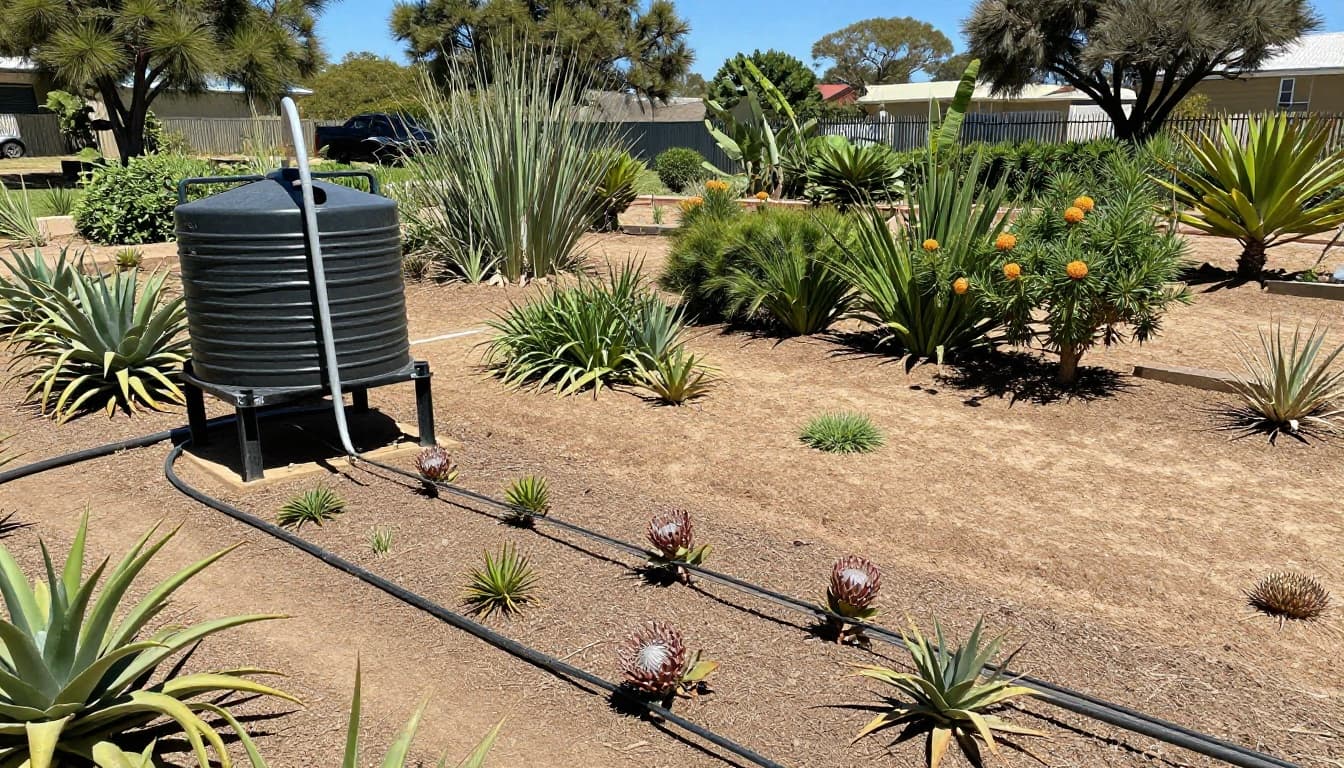
I set these up in an afternoon when I keep it simple and don't chase perfection.
- Place the tank and stand safely. Level ground matters. A full tank is extremely heavy, so build for weight and stability.
- Fit the outlet valve. Add a ball valve so you can stop flow fast during adjustments.
- Install the filter next. Put it after the valve, so you can isolate it and clean it.
- Run your 16 mm mainline along the bed. Peg it down. Keep it as flat as possible.
- Add an end cap or flush valve. Don't skip this. It's how you remove sand and bio-slime later.
- Punch take-off holes where plants need water. Push in the take-off connectors firmly.
- Connect 4 mm microtubing to each plant's root zone. I aim for the drip point under mulch, not on bare soil.
- Start with fewer drippers, then expand. Turn on the valve and watch. Adjust drippers until each plant gets a steady drip.
I always do one final test: I open the end flush and let water run for 30 seconds. Then I close it and check drippers again. That one habit prevents most "it worked yesterday" problems.
Keeping it unclogged, water-wise, and easy to live with
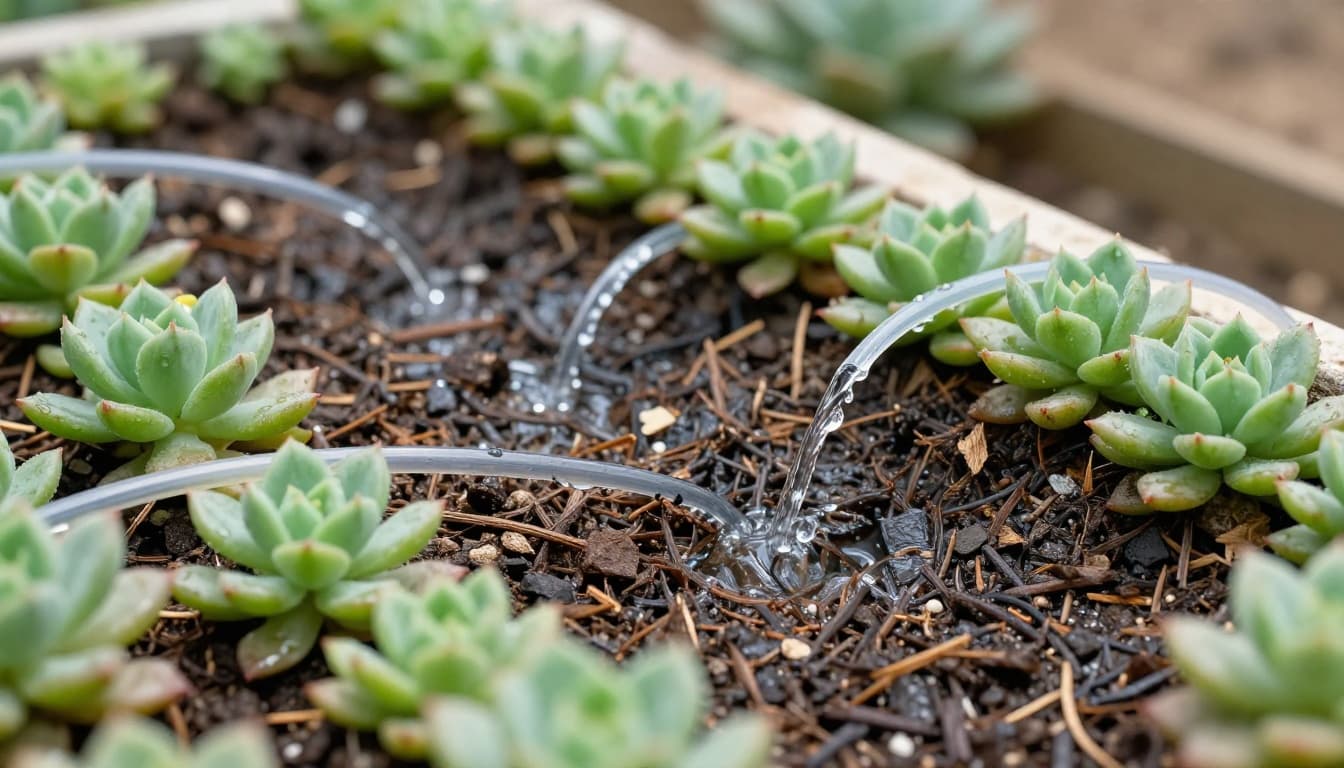
Gravity systems are forgiving, but they still need basic care. In summer, I check mine weekly because warm water grows algae faster.
Here's what I do when something looks off:
- Weak flow at the far end: I shorten the run, reduce drippers, or raise the tank slightly.
- Some drippers blocked: I rinse the filter, then flush the line, then clean or replace drippers.
- Uneven watering on slopes: I split the bed into two zones, each with its own valve.
- Soil still drying too fast: I add thicker mulch and water slower for longer.
- Tank water getting dirty: I cover inlets, and I keep the lid sealed.
One "upgrade" that still works during outages is a small battery timer at the tank outlet. It won't boost pressure, but it can automate on-off times.
If you're ready for more automation later, I've shared options in my guide to smart irrigation systems in South Africa. I still see gravity drip as the best base layer, then I add tech only where it truly helps.
For bigger-picture reading on water and irrigation planning in our climate, the Water Research Commission has a solid report on climate-smart irrigation in South Africa. It's more technical, but it reinforces the same idea: store water wisely, apply it efficiently, and avoid waste.
Gotcha to remember: gravity drip loves clean water, so the filter and flush point do most of the hard work.
Conclusion
A reliable garden watering routine in South Africa shouldn't depend on perfect power supply. With gravity fed drip irrigation, I can keep plants alive through outages, reduce waste, and water right at the roots where it counts. Start small, keep the lines clean, and raise your tank safely. Once you see that steady drip on a hot day, you'll wonder why you waited.